

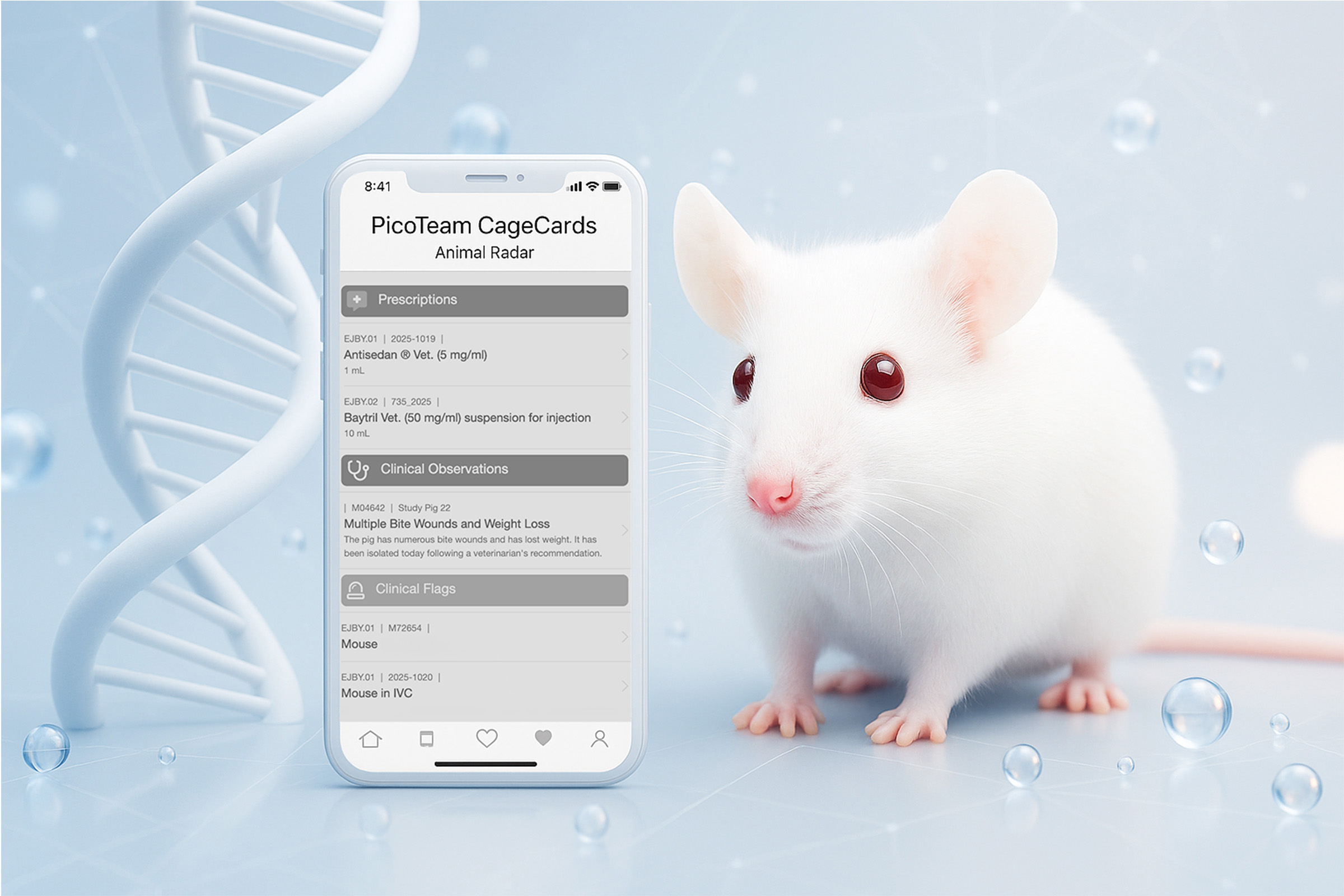
Real-time clinical flags ensure critical observations reach veterinary teams without delay
In many laboratory animal facilities, the flow of clinical information still depends on paper-based or manual processes. During routine rounds, an animal caretaker may observe something that requires attention—such as a behavioral change, a minor injury, or another notable condition. These observations are documented and communicated through established channels, whether as written notes or direct verbal reporting to the veterinary team.
While these procedures are standard, manual communication and busy workflows can introduce delays, especially across shifts or during peak activity. This challenge affects both welfare and operational continuity, and digital tools can help address it by enabling faster, more consistent information sharing.
Clinical Flags: Real-Time Documentation at the Point of Care
With the Clinical Flags feature in the PicoTeam Mobile App, caretakers can document clinical concerns the moment they arise. When a caretaker notices something that may require veterinary attention, they simply open the app at the cage, enter a brief description, capture up to 10 photos, and tap “Save.”
Once a Clinical Flag is created, it immediately appears within the facility-wide overview provided by the Animal Radar.
The Animal Radar: Real-Time Visibility for Veterinary Decisions
When a clinical flag is created, it appears instantly on the Animal Radar—a centralized digital dashboard designed for veterinary staff and facility managers.
The Animal Radar consolidates key care priorities across the facility into a single, organized view. It includes sections for active prescriptions, clinical observations requiring follow-up, clinical flags, and scheduled fasting. Each category uses color-coded indicators to highlight urgency—red for items needing immediate attention and yellow for pending actions.
For veterinarians, this provides immediate visibility without relying on paper notes or verbal updates. Every flagged animal can be reviewed at a glance, and a single tap opens the complete animal record. This ensures timely awareness and supports more efficient clinical decision-making across the facility.
Immediate Alerts for Veterinary Teams
The Animal Radar provides real-time visibility when veterinary staff are actively monitoring the dashboard. However, veterinary workflows often extend to surgery, meetings, or other tasks where the dashboard is not accessible.
Clinical Flags trigger immediate notifications through configurable channels such as Microsoft Teams, SMS, or email. Each facility can select the channels that best support its workflow. A veterinarian receives a Teams message on their phone the moment a caretaker submits a flag.
This ensures that veterinary response does not depend on checking the dashboard. Critical information is delivered directly to the right person, wherever they are.
Digital Cage Cards: Point-of-Care Visibility
The PicoTeam Digital Cage Cards add another important layer to this system.
When a clinical flag is created, it appears not only on dashboards and notifications but also directly on the electronic cage card at the animal’s location. Anyone approaching the cage – whether a caretaker or technician – can immediately see that the animal requires veterinary attention.
This visual continuity from mobile app to dashboard to cage card ensures that a clinical flag is never overlooked. Information remains accessible across all touchpoints in the facility, supporting timely and coordinated care.
Secure, Compliant Documentation for Research Facilities
In laboratory animal research, documentation is not only a communication tool—it is a critical component of compliance, auditability, and the protection of sensitive information.
Images of research animals can be particularly sensitive, which is why all photos captured through Clinical Flags are encrypted both in transit and at rest. This safeguards animal welfare documentation while maintaining the confidentiality required in regulated environments.
The system also provides a comprehensive audit trail. Every clinical flag is timestamped, every status change is recorded, and every response is logged. This digital record supports regulatory compliance and offers historical data that would be difficult or impossible to maintain using paper-based methods.
Facilities looking to streamline clinical documentation and reduce communication delays may benefit from incorporating digital flagging tools into their workflows.