
Why Fragmented Information Creates More Than Administrative Work
Animal research facilities generate information continuously.
Observations are recorded. Animals are moved. Treatments are completed. Procedures take place. Samples are collected.
This information supports animal-care staff, veterinarians, researchers, study teams, facility managers, and other personnel.
Problems arise when workflows cross several systems, spreadsheets, paper records, emails, and local files. Staff then need to connect the information manually.
Fragmentation creates delays, duplicate work, lost context, weaker traceability, and more effort to keep teams working with current information.
Information Can Quickly Become Out of Date
Several digital systems can still produce a partly manual workflow.
A technician completes a treatment or records an observation. Another person may still be working with information that has not yet been updated.
This happens easily when work takes place in the animal room but documentation is completed later at a desktop.
The delay creates a gap between the activity and the information available to other users.
Current information supports daily coordination, veterinary follow-up, study activities, and operational decisions.
The digital record should reflect the work as closely as possible to the time and place where it happens.
Different Roles Need Access to Current Information
Animal-care staff, veterinarians, researchers, and facility managers have different responsibilities, but their work often depends on the same events.
A technician identifies an animal-health issue. A veterinarian assesses it. A researcher evaluates whether it affects the study. A facility manager follows the required actions.
Fragmented information makes this coordination harder.
One person may have the latest information in a spreadsheet. Another works from the central database. A third receives an update by email.
Role-based access remains important. Each person should see and manage the information relevant to their responsibilities.
The operational goal is clear:
The right information should reach the right person at the right time.
Manual Handoffs Increase Work and Risk
Disconnected workflows require information to move manually between people and systems.
An observation may start on paper, move into a database, be communicated by email, and later be added to a study record.
Each transfer takes time and creates another opportunity for delay, transcription error, incomplete information, or inconsistency.
OECD GLP data-integrity guidance also emphasises timely, attributable records and reducing unnecessary transcription where possible.
The practical implication is straightforward: capture information close to its source and reuse it throughout the workflow where appropriate.
Fewer manual handoffs mean fewer points where information needs to be transferred, checked, or corrected.
Data Needs Context
A value alone often has limited meaning.
A measurement may need to remain connected to the animal, study, procedure, time point, user, location, device, or sample that gives it context.
When these relationships are distributed across several systems, staff need to reconstruct them manually.
The same issue appears across the animal lifecycle. Housing information may sit in one system, clinical records in another, study activities elsewhere, and samples in a separate application.
Each individual record can be correct while the overall history remains difficult to follow.
Good data management preserves the relationships around the data, not only the individual values.
Traceability Becomes More Difficult Over Time
Fragmented information may appear manageable while the people involved still remember where everything is stored.
That knowledge becomes less reliable over time.
A correction may exist in one system, the explanation in an email, the approval somewhere else, and the original activity in another record.
Reconstructing the full history can then require several searches across different sources.
This affects study review, reporting, audits, investigations, and long-term record keeping.
Strong traceability should make it possible to establish who performed an activity, when it happened, what changed, why it changed, and what happened next.
Regulatory and Quality Requirements Add Complexity
Animal research facilities work under different regulatory, ethical, quality, and institutional requirements.
Depending on the environment, these requirements can affect documentation, permissions, approvals, audit history, changes to records, and retention.
Fragmented workflows increase the number of places where these requirements need to be managed.
A permission may be controlled in one application while an approval or explanation is stored somewhere else. This adds complexity for organisations working under GLP, other quality systems, or different requirements across sites.
Software can support these processes through structured records, role-based access, traceability, and controlled workflows. Compliance remains the responsibility of the organisation.
Workarounds Create More Fragmentation
People create workarounds when the main system does not support everyday work efficiently.
A spreadsheet appears. A paper list is created. An email chain becomes part of the process. Another application is introduced for one specific activity.
Each workaround solves an immediate problem, but it also creates another place where information may live.
Over time, a facility can have a sophisticated central platform while important parts of the real workflow continue outside it.
This is why usability has an operational impact.
A platform with extensive functionality delivers limited value when common activities require too many steps or are difficult to understand. Users then concentrate on basic functions and manage the remaining work elsewhere.
Useful functionality needs to be practical enough to become part of everyday work.
Fragmentation Limits Future Digitalisation
Dashboards, automation, connected devices, analytics, and AI depend on structured, current, and well-connected information.
Fragmented source data creates additional preparation and integration work before these technologies can deliver useful results.
Another application can also increase fragmentation when its information flow is poorly connected to existing workflows.
Automation and AI depend on the quality, structure, and context of the information underneath them.
Reducing the Work Between Systems
Disconnected workflows create operational work that often remains invisible.
Staff spend time transferring information, checking whether records are current, finding missing context, coordinating between teams, and reconstructing history.
Better digitalisation reduces this work.
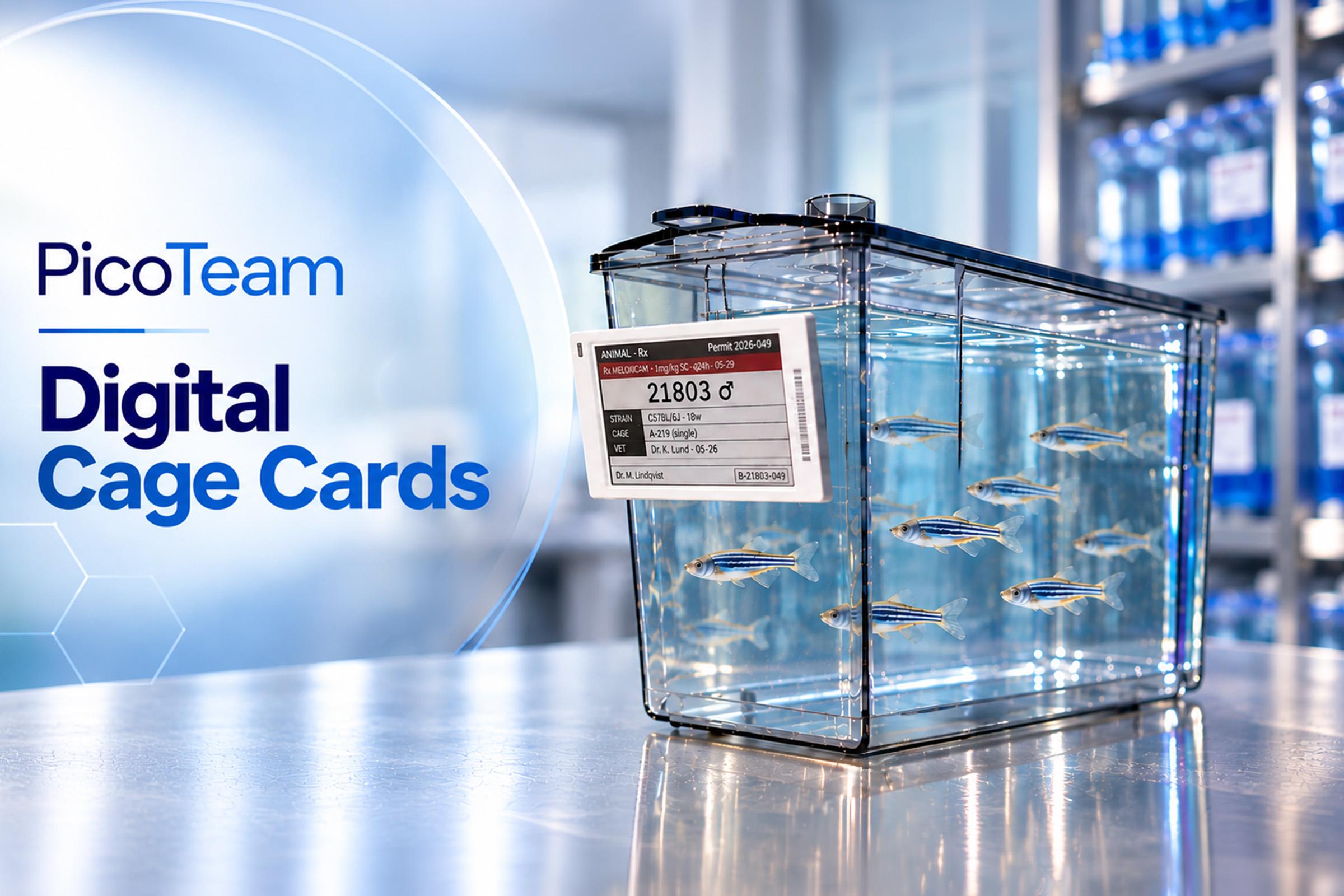
At PicoTeam, this principle is central to PicoTeam InVivo – Research and Facility Operations Platform, where animal, facility, study, and clinical information is connected across the platform, while Digital Cage Cards and mobile workflows bring current information directly to the cage side and allow activities to be recorded where the work happens.
The aim is practical:
Fewer manual handoffs. Current information for the people who need it. Clearer traceability. More connected animal, study, and facility data.
Less time connecting the pieces manually—and more time using the information.