
Connected data for animal welfare, research quality, and the 3Rs
In vivo research is resource-intensive. Every study generates observations, measurements, samples, welfare assessments, treatments, decisions, and results. Together, they form an important body of scientific evidence.
A measurement should remain linked to the animal, study, protocol, time point, procedure—and, where relevant, the sample from which it originated. These relationships provide the context needed to interpret findings and compare evidence across studies or methods responsibly.
Transparency requires records that are retrievable by the right people, together with enough detail to understand what happened and why. This supports effective oversight and confidence in the study record.
The future of research depends not only on new technologies and methods, but also on ensuring that the evidence generated today remains traceable, reusable, and informative for future decisions.
Connected information can support all three Rs:
In the EU, the principles of Replacement, Reduction, and Refinement are embedded in Directive 2010/63/EU, which also includes provisions on avoiding duplication of procedures.
Well-structured and reusable information can help facilities put these principles into practice.
Replacement — Reliable in vivo reference data can support the development and evaluation of computational and non-animal approaches.
Reduction — Searchable, contextualized historical evidence can help identify existing knowledge, avoid unnecessary repetition, and inform study design and decision-making.
Refinement — Connected observations, treatments, severity assessments, and follow-up can support timely and consistent welfare decisions.
Digitalization delivers its greatest value when information is structured, connected, governed, and used consistently.
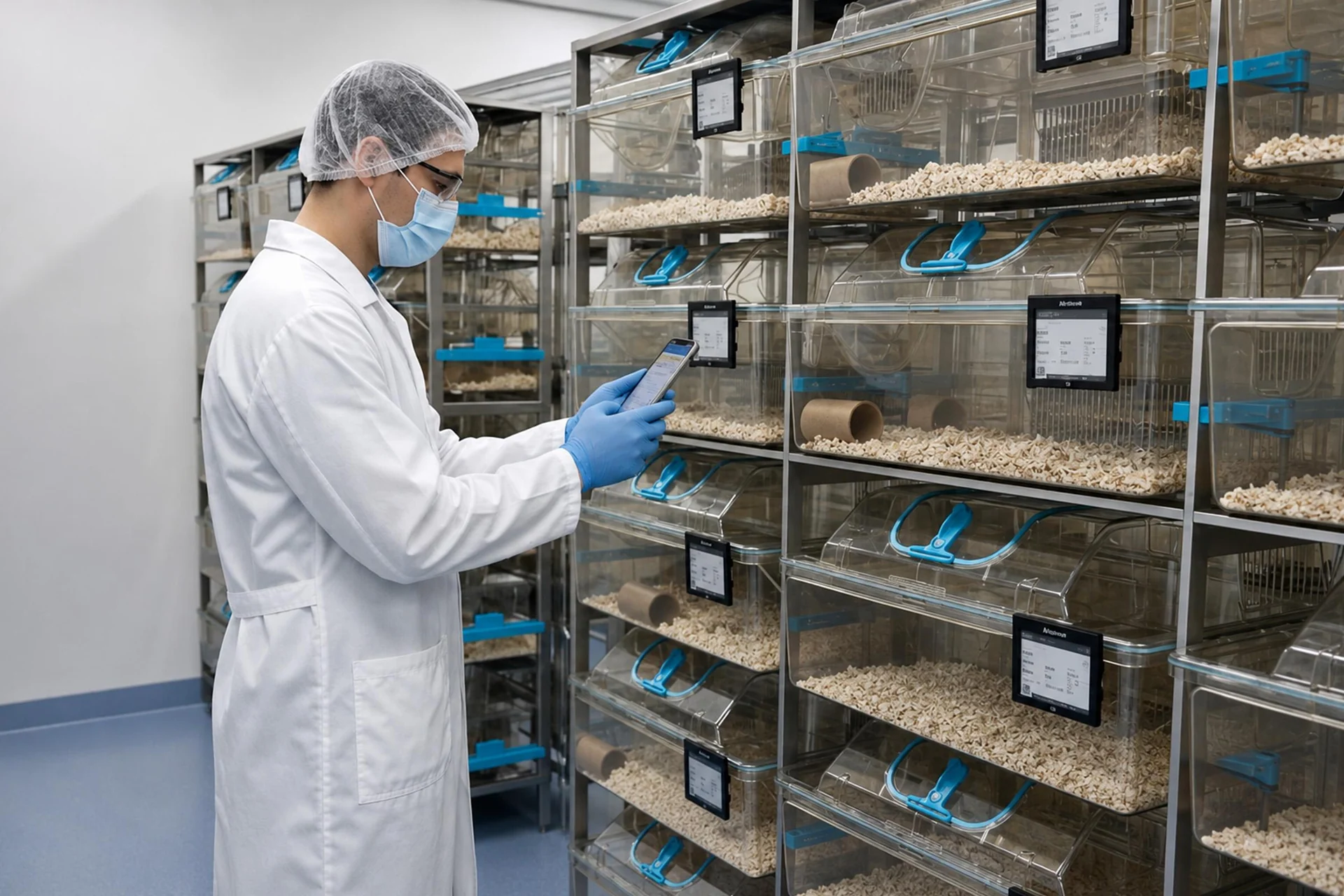
PicoTeam InVivo puts this principle into daily practice by bringing cage-side observations, animal histories, study execution, samples, and results together in a single traceable information chain—making information easier to retrieve, understand, and reuse throughout and beyond the study.
The result:
- More complete information with less manual reconstruction
- Stronger welfare documentation and clearer oversight
- More reusable evidence for future analysis and better-informed decisions
A study ends. Its knowledge should remain.